
Rechargeable Battery Life Questions and Answers
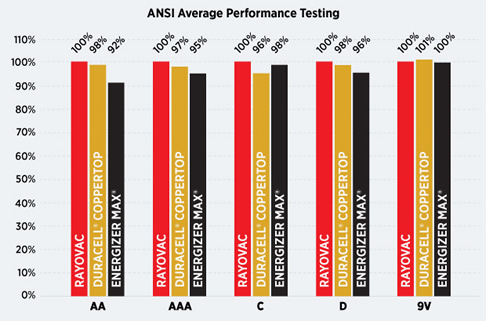
Important Article Read: Which Alkaline Battery Is Best The Longest Duracell, Energizer or Rayovac?
Q: I just bought rechargeable the batteries. What do I need to do before first using them?
First you must fully charge them. Please note that for new NiMH batteries, it is often necessary to cycle them at least three to five times before they reach peak performance. Battery cycling can be achieved simply by using the batteries as you normally would and then recharging them.
Q: How long can the rechargeable batteries hold their charge if I leave them on the shelf (shelf-life)?
At room temperature, NiMH batteries will self-discharge in around 30 to 60 days, depending on environmental condition. In other words, if you leave the batteries on the shelf for more than 30 – 60 days, you should recharge the batteries before using them. It is normal for batteries to be fully depleted of power after long term storage. Here is a List of Battery Terms.
Q: My camera came with 1200mAh Batteries. Can I still use 1800mAh rechargeable batteries or will they hurt my camera.
Yes, you can use the 1800 mAh batteries. 1800mAh is the capacity of a battery, not its strength. Capacity is how much capacity energy a battery holds once it is fully charged. The more capacity, the longer a battery will last in any given application. Voltage is the strength. Rechargeable batteries actually develop around 1.4 to 1.45 volts when fully charged even though they are marked as 1.2V.
Q: How many times can I recharge my rechargeable batteries?
The number of times you can recharge your batteries will depend on drain rate, battery care, etc. In general, under desirable conditions, NiMH batteries can last up to 500 recharges. In absolute best conditions, NiMH batteries can last up to 1000 recharges.
Q: How much performance improvement can I expect using NiMH rechargeable batteries instead of other batteries on my high drain device like a digital camera?
First: NiMH batteries are rechargeable upwards of 500 to a 1000 times. This means you can use the batteries over and over again. If you are familiar with “rechargeable alkaline” (which are significantly lower in price), their life is only about 50 recharges. Here is a List of Battery Terms.
Second: NiMH batteries are designed for power-intensive applications. NiMH batteries maintain their high power during most of its usage. In other words, NiMH batteries maintain a high and consistent voltage during most of its discharge. On the other hand, for alkaline batteries, their voltage drops rapidly when used in power-intensive applications such as a digital camera. This explains why you can only take 20-30 pictures using alkaline, while you can take up to 150-200 pictures using NiMH. (For those who are a bit more technical, take a look at the discharge curve of a NiMH battery)
Third: Capacity counts. NiMH batteries are rated in “mAh”, an acronym for “milli-ampere hours”. This number tells you how long the batteries can last under a certain power consumption. The higher the better for this number.
Q: How often should I condition my rechargeable batteries?
Generally speaking, NiMH batteries do not suffer from the “memory effect” and thus do not require conditioning. Nevertheless, to ensure top performance, conditioning is recommended at once for every ten charges. For Nickel Cadmium (NiCD) batteries, conditioning is recommended every time you charge your batteries.
Q: What is the difference between NiMH batteries and “rechargeable alkaline” batteries?
Recently the market has introduced a new type of supposedly affordable rechargeable alkaline batteries. However, they do not compare with NiMH rechargeable technology. The key difference is that rechargeable alkaline batteries can be recharged up to 50 times. NiMH can be recharged up to 500 times.
Q: What do you mean by “no memory effect” on NiMH batteries?
Memory is a type of problem that traditional NiCD batteries usually develop. You probably have heard that in order to maintain the life and performance of rechargeable batteries, you have to fully drain the batteries before recharging them. Thanks to “memory free” technology featured on NiMH batteries, you can charge them anytime you wish, regardless if the batteries are fully drained or not. Here is a List of Battery Terms.
Here are some head to head comparisons:
New Generation Nickel Metal Hydride Batteries Traditional Nickel Metal Hydride Batteries Nickel Cadmium Batteries Memory Effect
(Do you have to fully drain the battery before recharging) None None YesCapacity (How long a battery will last) 1800mAh (AA) 1300mAh to 1600mAh 600mAh to 1000mAhAbility to accept trickle charge(Can you leave batteries in the charger) Yes No YesLife cycles (How many times can you recharge the batteries) 500-1000 cycles (Depends on discharge & charge rate) 250-500 cycles 500-1000 cyclesEnvironment Problem None None Yes. Highly toxicDischarge Characteristics (How well does the battery hold up when used in a high drain device)Remain above 1.2v/cell at 1C discharge curve during 80% of usage.Click here for details. Remain above 1.2v/cell at 1C discharge curve during 80% of usage Remain above 1.2v/cell at 1C discharge curve during 45%-50% of usage* Cell information and specification varies from brand to brand
Q: I have not used my NiMH rechargeable batteries in several months and they are not holding their charge. How can I fix this?
NiMH batteries will self-discharge if left unused. Generally, within 30 to 60 days, batteries will become completely drained. When using them, you will need to first recharge them. After extended storage, you may need to condition (using the conditioning feature on PowerEx chargers like the MH-C204F) the batteries several times to regain nominal performance.
Q: I plan to use the NiMH batteries as a backup power. How long will they hold their charge?
This is commonly referred to as the “shelf life” of batteries. For NiMH batteries, the shelf life at room temperature is about 70 to 90 days (for those who are a bit more technical, take a look at the charge retention curve). If you are seeking for longer shelf life, you may wish to consider alkaline or non-rechargeable lithium batteries, which are commonly used for memory backups. Here is a List of Battery Term Glossary.
How Batteries Are Made Video
Q: Explain the various battery symbols and terminologies.
“mAh”: Stands for milli-ampere hours. It measures the capacity of the batteries. For example, a 1000mAh capacity means that the batteries will last for 1 hour if subjected to a 1000mA discharge current.
“C”: defines the rate at which a battery is charged or discharged. It is the capacity obtained from a new battery subjected to a constant-current discharge at room temperature. For example, draining a battery at 1C means to drain the capacity of a cell completely in one hour. Likewise, draining a battery at 0.2C means discharge a battery in 5 hours. For nickel-metal hydride cells, the rated capacity is normally determined at a discharge rate that fully depletes the cell in five hours, or 0.2C.
“V”: Stands for voltage. It measure the power of the batteries. For NiMH batteries, they are 1.2V. For alkaline batteries, they are 1.5V.
Q: I recently received a dozen AA NiMH batteries that I ordered from you. Today I put four of the batteries in a charger for the first time. The charger came with my digital camera, and was made by Olympus specifically for NiMH rechargeable batteries. I was startled to find that as the batteries charged they got almost too hot to hold. I know that with other types of batteries, ANY perceptible heating during charging is a sign of possible battery damage. I wonder if you can shed any light on what is happening here. Is my charger defective, or badly designed, or is this normal for NiMH cells?
This is pretty much normal. NiMH batteries can reach as high as 130 degrees during a charge cycle as pointed out by Energy. The amount of discharge and of course the rate of charge will affect this.
This is why we recommend the following
1. Do not close the cover ( if your NiMH Battery Charger has one ) while your batteries are charging. It is best to allow any heat to dissipate as much as possible.
2. You also may wish to use a small fan to help keep the batteries cool, and prevent excessive heat build up during charging. List of Battery Term Glossary.
Q: Do NiMH batteries really require a special charger (other than those designed to recharge Ni-Cd batteries, or is that just a marketing ploy by the manufacturers of the chargers? I looked at a charger that has separate settings for both Ni-Cd and Ni-MH batteries, and it appears that the mA output is the same for both settings.
Newer NiMH battery chargers are designed to specifically charge NiMH and NiCD chemistries. However most of the older NiCD chargers were not designed to charge any other battery chemistries such as NiMH since they were unavailable at that time these chargers were designed. That is why many of the newer NiMH/NiCD chargers are capable of automatically charging both types, while others have a switch.
There is more than just mA ratings involved when charging different battery chemistries (rate of charge, length of charge, type of charge. etc…) While it is true that some NiCD chargers can be used to charge NiMH batteries you must consider the following points if you decide to attempt to charge your NiMH batteries using an older NiCD charger.
1. Improper charging or using a charger that is not specifically designed to charge any rechargeable battery can cause their useful life to be shortened dramatically or in some cases actually damage them permanently. We have even had some individuals attempt to charge rechargeable alkaline batteries in some of our chargers and were surprised when they exploded.
2. Although a NiCD charger may seem to be charging NiMH batteries fine, this is not usually the case. NiMH chargers are specifically designed to prevent Hydrogen bubbles from forming on the battery plates and of course to charge them to their full potential. List of Battery Term Glossary.
Video: How Batteries Are Made? .
Rayovac Home Charger – Duracell Battery AA Charger
JWIN Camera Charger – Digital NiMh Battery Charger – Coby AA Battery Charger

Use of the site constitutes acceptance of our Term of Use
Copyright 2002-2011 Batterysavers.com All rights Reserved | Privacy Policy
North Palm Beach Chamber of Commerce Member
Emergency Supply Checklist
Compare Batteries
Rayovac charger batterys – Duracell battery aa charger – JWIN – JB-C202 Digital NiMh Battery Charger – Coby AA Battery Charger
The CSS Beautifier is a brilliant free online tool to take care of your dirty markup.
Dont worry when you forget the syntax of an HTML element, like and iframe, a link, a table, an image or anything else. Go to HTML CheatSheet and generate the code you need.